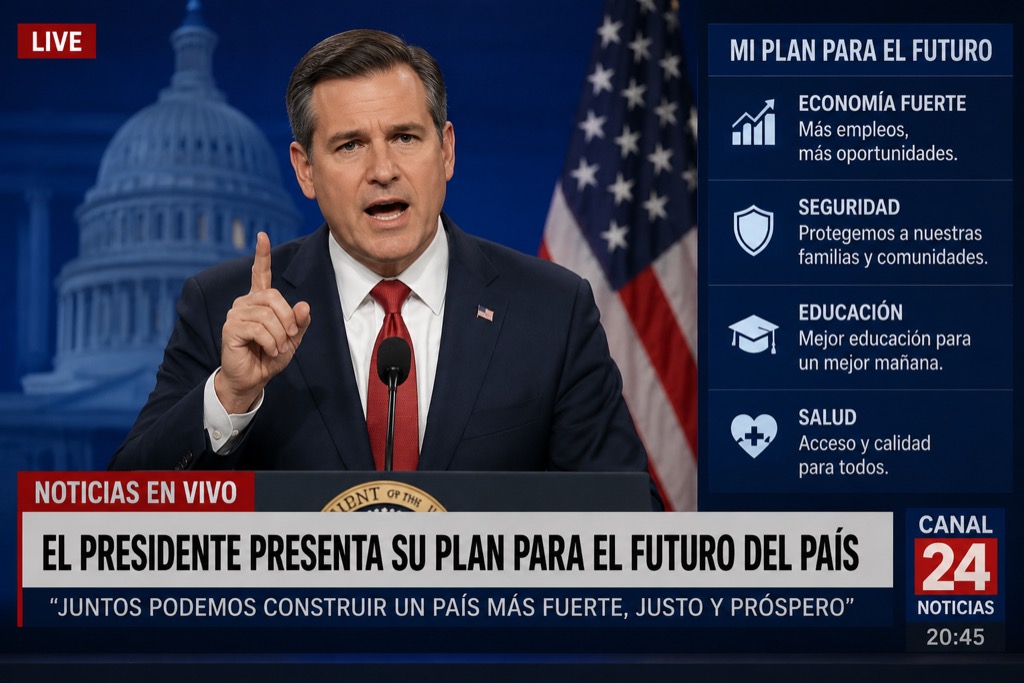
InTruth listens to a video or a live stream, transcribes what is being said, and instantly checks if those facts are true. It is not a lie detector: it looks at the sentence, not the person. A polygraph does exactly the opposite.
Think about the last election debate you watched. Someone drops a figure at minute twelve. It sounds convincing. And you are left wondering if it's true, but the debate goes on and there's no way to stop it. Three days later a newspaper reports that the figure was wrong, but by then no one remembers anymore.
That three-day gap is what InTruth tackles.
It is a free extension for the Chrome browser. You install it, open the video, and as people speak, it shows up on the side of the screen whether each fact is true or not. Without pausing anything.
Who made it
A developer named Risha P., based on a university project. It went viral a few weeks ago and already works in sixteen languages, including Spanish.
How it works
It is simple to use:
- You open the video or live stream you want to watch.
- You turn on the extension.
- It asks who is speaking and you indicate it.
- As they speak, warnings appear in a side panel.
The hard part is not transcribing. The hard part is distinguishing what is worth checking. In a debate, most of what is said are opinions, promises, and adjectives. Only a small part are facts that can be looked up somewhere. The extension separates that part and checks it.
What it tells you exactly
Each checkable statement receives one of these five labels:
- True. The fact holds up.
- Mostly true. The core is correct although there may be some imprecision.
- False. It does not match the sources.
- Misleading. The facts are true, but told in a way that leaves you with a wrong idea.
- Unverifiable. Too vague or there is no way to verify it.
The interesting label is the "misleading" one. Almost no one makes up figures when they have a camera in front of them. Something else is done: choosing the convenient year, comparing with what interests them, leaving out the context. All true and yet you go to bed with a false idea in your head.
One more thing it does well: it shows you which media outlet it got the data from and whether that outlet leans more to one side or the other. Instead of giving you an oracle's verdict, it leaves the last word to you.
Install InTruth · Trial version
What it does not do
It does not check opinions or promises. If a candidate says "in four years we will double youth employment," that is neither true nor a lie: it has not happened yet.
And this is the important thing: it does not tell you if that person is lying. It only tells you if the statement is true. They are different things. Someone can repeat in good faith a false fact they read somewhere. And someone can tell the truth knowing perfectly well that it will confuse you. The extension treats both cases the same, because it only looks at the sentence.
So, is it a lie detector?
No, and it is worth clarifying because half the internet is calling it that.
A lie detector does not check facts. It measures the person: their breathing, their heart rate, and their skin response while answering pre-prepared questions. It does not search Google, it searches the body.
The difference is understood with two examples.
If someone says on television that youth unemployment fell by 12%, that is in a public statistic. A machine checks it in seconds and no one needs to give their permission, because it was said out loud.
If someone says "that night I was at home," there is no statistic to consult. There is no record. There is only a person, a question, and a body that responds. That is where the polygraph test comes in, always with the signed consent of the person undergoing it.
Summarized:
| InTruth | Polygraph | |
|---|---|---|
| What it looks at | What is said | The person saying it |
| Useful for | Public facts | Private matters without witnesses |
| Permission required | No | Yes, always |
| Valid in court | No | With an expert report, yes in civil or labor proceedings |
If you're curious about how a polygraph really works, we explain it in the science behind the polygraph. And if what you have in mind are movie scenes, here we dismantle the myths.
The flaws people find
It's not all good news. Three complaints are repeated in the Chrome store reviews:
- Sometimes it doesn't know who is speaking. If the video doesn't properly identify the participants, it goes blank and stops checking things. In a panel with five people talking at once, that's a bad business.
- It transcribes but doesn't always assess. There are users who see the text and never get to see the result.
- It can be wrong. The author herself warns: it is artificial intelligence and can give you an incomplete or outright incorrect fact-check.
That last point carries the most weight. An AI can state with complete certainty something it half-invented. It is worth looking at the sources it cites before taking anything as true. Blindly trusting the tool that promises you judgment is swapping one problem for a more elegant one.
And what is this good for me?
To watch politics with less noise. It is great for voters, journalists, students, or anyone who is tired of waiting for the next day's rebuttal.
What it does not solve is the other kind of doubt. Suspicion in a couple. The missing money in a company's cash box. An accusation in which there are only two versions and no witness. There, there is no source to consult. There is a prior interview, agreed-upon questions, and an examiner reading what the body answers.
We have written quite a bit about that: when it makes sense to use a polygraph at work, if the polygraph fails when you are nervous, and why reading gestures works much worse than people think.
Technology has reduced to seconds the distance between a public lie and its rebuttal. With private truth, we still need the usual: a quiet room, the right questions, and someone who knows how to read what the body responds when the mouth hesitates.
Frequently asked questions
Is InTruth a lie detector?
No. It checks if a fact is true, but it does not measure anything about the person saying it. A lie detector registers breathing, heart rate, and skin response during a prepared interview.
Does it work in Spanish?
Yes. It works in sixteen languages.
Is it reliable?
It is a help, not a verdict. The author herself warns that it can make mistakes and recommends looking at the sources it cites.
Is it valid as evidence in a trial?
No. Automatically checking a public statement has no legal value. A polygraph expert report can be presented, and the judge evaluates it freely in civil or labor proceedings.
Can I use it to know if my partner is lying to me?
It is not for that. It only checks facts that are registered somewhere public. For private doubts, the way to go is a polygraph test, always with consent. You can resolve doubts in frequently asked questions or request an appointment.