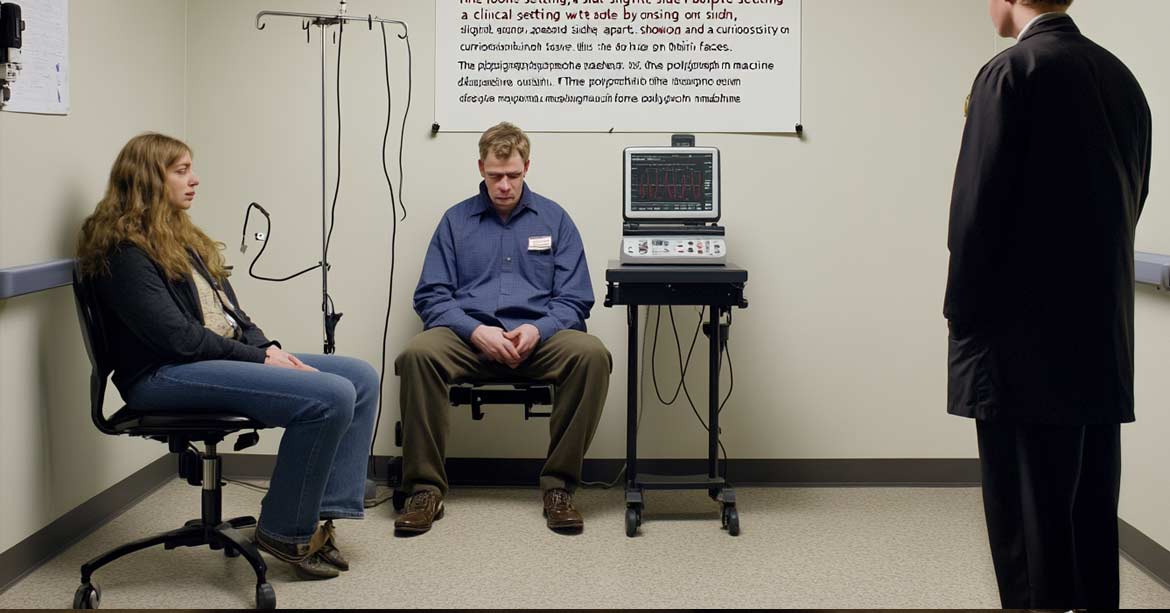
The science behind the polygraph: How does it really work?
Have you ever wondered what's in the guts of the lie-detecting machine? We will delve into The science behind the polygraph: How does it really work?. Yes, we are talking about the famous lie detector, a fascinating device that has captivated global attention.
Polygraph basics
The polygraph is not a magic machine, but a device that records various physical parameters while you are being asked questions. Changes in breathing, blood pressure and perspiration can reveal whether you are telling the truth or faking it.
From the chair you sit on to the sensors they place on your body, each element plays an essential role. But to understand the science behind the polygraph and how it really worksWe need to do more research.
The science behind the body's responses
When someone lies, their body experiences stress. This stress can be measured through changes in breathing, pulse and perspiration. This is how the polygraph develops its role as an arbiter between truth and lies.
Nerves do not fool the polygraph: because the technique compares your reactions question by question, general nervousness affects them all equally and cancels out. An expert examiner tells that normal nervousness apart from a reaction that does reveal deception. At The polygraph test many of these doubts are clarified.
The role of the interrogator in the polygraph
Without a skilled interrogator, the machine is just that, a machine. A trained professional knows how to interpret the results and identify truths and lies. But before starting with the key questions, a pre-test is conducted to establish a baseline of honest answers.
Polygraph and today's technology
Today, technology has developed even further, allowing polygraphs to detect even small fluctuations in tone of voice, which could indicate that a person is lying.
So how does a polygraph actually work? Simply put, it measures the changes that lying produces in the body, and an expert examiner interprets them following a rigorous protocol; its validated techniques reach an accuracy of 85-90% according to the American Polygraph Association.
The science behind the polygraph and how it works is a fascinating and constantly evolving field, a testament to our desire to seek the truth. It is a solid and remarkable tool in the search for honest answers to complex situations.