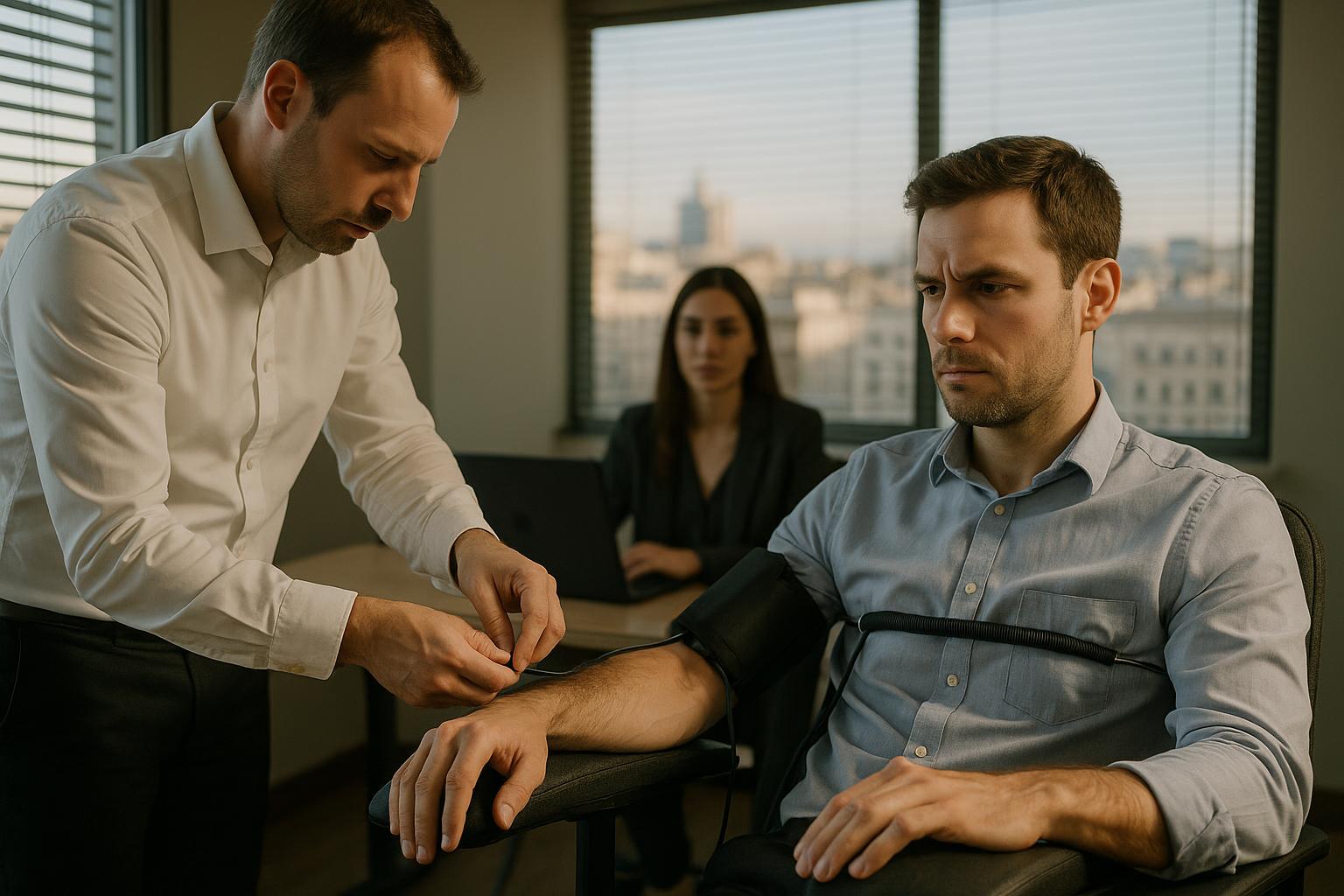
When an individual or a company needs to undergo a polygraph test in Madrid, one of the first concerns that arises relates to logistics. Understanding how travel is coordinated and what elements make up the session helps eliminate uncertainty and better prepare for the exam. The process is methodical and designed to ensure the examinee's well-being and the reliability of the data collected.
Travel and location of the test in Madrid
Travel for a polygraph test in the Community of Madrid can be managed in two main ways, depending on the needs of the case and the type of investigation.
Travel to our facilities
For most cases, especially private ones, it is recommended to conduct the exam in a controlled environment. We have offices enabled at strategic points in Madrid, equipped with soundproof rooms free from distractions. This isolated environment is essential for the examinee to maintain concentration and for the polygraph equipment to capture physiological variations without external interference. The client's travel to our offices is the most common scenario and allows total control over environmental conditions such as temperature and noise.
Examiner's travel to the company
In the case of corporate tests, internal fraud investigations, or massive personnel selection, travel works in reverse. The professional examiner travels to the company's facilities in Madrid. For the exam to be valid, the company must provide a private room that meets minimum space and noise requirements. The polygraph technician transports their equipment, which usually consists of the instrument itself, a laptop with the recording software, and calibration tools. Traveling to the company saves productivity time, as employees can go to the designated room during their shift without leaving the building.
What a polygraph test includes
The cost and formalization of a polygraph exam are not limited to the connection of the sensors. The comprehensive service encompasses a series of phases that ensure the procedure is ethical, legal, and useful for the purposes of the investigation. The effectiveness of the polygraph lies in the 85 to 90 percent range, provided all protocol steps are followed without exception. A standard service in Madrid includes the following elements:
- Prior case study and analysis: The examiner reviews the facts, the accusations, and the material provided by the client to understand the context of the investigation and draft the appropriate questions.
- Pre-test interview: A chat phase in the room where the examiner explains how the device works, reviews the questions with the examinee, and ensures they understand each of the issues. There are no surprise questions.
- Sensor connection and the exam: Placement of pneumographs to measure breathing, a cuff for blood pressure, and gauges for electrodermal activity. Several rounds of questions are conducted.
- Data analysis: The technician evaluates the charts generated by the physiological responses during and after the relevant and control questions.
- Report delivery: Drafting of a document with the test result, the graphs supporting the conclusion, and the video recording of the session to safeguard the transparency of the process.
How to prepare for travel and the test
For the session to run smoothly and the data obtained to be reliable, the examinee must follow a series of basic guidelines. Lack of rest or extreme stress negatively affect vital signs, which can invalidate the exam or make it too difficult to interpret.
- Sleep: Sleep at least seven or eight hours the night before traveling to the Madrid headquarters.
- Nutrition: Have a light meal before the test. Arriving on an empty stomach can cause dizziness, and a heavy meal causes drowsiness.
- Substances: Avoid the consumption of alcohol, excessive stimulants, and any type of recreational drugs in the 24 hours prior to the exam.
- Medication: If the examinee takes prescription medication, they must notify the examiner during the pre-test interview so that the effect of these drugs on the charts can be taken into account.
Transparency is the foundation of the polygraph exam. The examinee has the right to know what they will be asked before the data recording phase begins. The pressure to hide information or the fear of the test itself is addressed during the prior interview to separate natural nervousness from responses associated with lying.
Duration of the process in Madrid
The total time the examinee will spend in the exam room varies depending on the complexity of the case, but the average duration is between two and three hours. This estimate includes travel through the building to the room, the pre-interview which usually lasts about 45 minutes, the placement of the sensors, and the different phases of questioning. A common mistake is to think that the test time equals the time the sensors are connected. Most of the time is invested in the prior conversation and in reviewing the questions to ensure the examinee understands what they will be evaluated on.
Taking a polygraph test in Madrid is an accessible and well-structured process. The key to success lies in the preparation of both parties, compliance with the agency's protocol, and the optimal conditions of the exam room, regardless of whether one opts for traveling to our facilities or for the examiner traveling to the client company's headquarters.