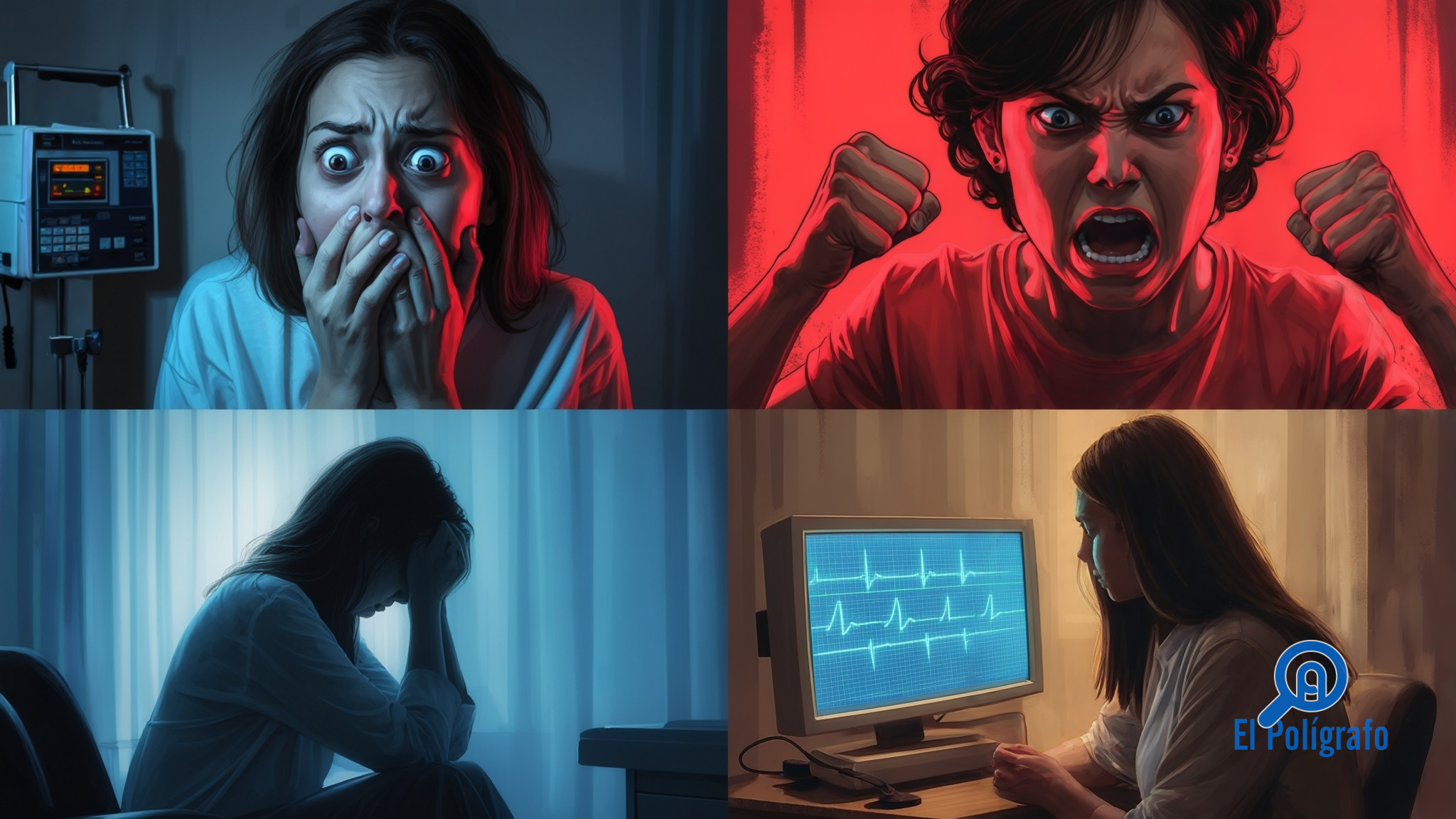
Have you ever wondered how infidelity affects a person's emotional state? One thing to clarify up front: the polygraph does not measure mood stages (denial, anger, acceptance…), but the body's reaction to specific questions, to assess whether an answer is truthful. With that in mind, let's look at both.
Facing infidelity can trigger a whirlwind of emotions. Everyone experiences it differently, but people generally go through a common path of emotional stages.
The Denial Stage
The first emotional stage we face is usually denial. Our mind tries to protect us from the pain by denying the reality of the situation.
The polygraph does not detect the denial stage itself; what it records are the changes in breathing and pulse when the person answers a specific question.
The Anger Stage
Following denial, anger appears. In this stage, it is common to blame the other person for the infidelity. Our emotions run high. In a test, the polygraph does not measure anger, but the physiological reaction —muscle tension, skin conductance— to each question.
The Bargaining Stage
Here we look for some form of reconciliation or understanding to cope with our reality. We try to bargain with ourselves or with our partner. The polygraph does not assess this emotional stage; it measures heart-rate fluctuations in response to specific questions.
The Depression Stage
The next step on the emotional journey is depression. We feel sad, drained and lost. A polygraph test does not diagnose a mood such as sadness; its purpose is different: to assess the truthfulness of specific answers.
The Acceptance Stage
Finally, we reach acceptance. Accepting reality allows us to begin to heal. The polygraph does not monitor this stage; it focuses on the body's reaction to specific questions.
Our emotions are powerful, and when applied to a situation as painful as infidelity, they can be devastating.
The polygraph, known as the polygraph test, is a tool that provides objective answers about what happened, which helps to settle doubts and move towards recovery.
Infidelity is a harsh betrayal, but understanding our emotions —and having objective answers when they are needed— can help us overcome it and grow personally.