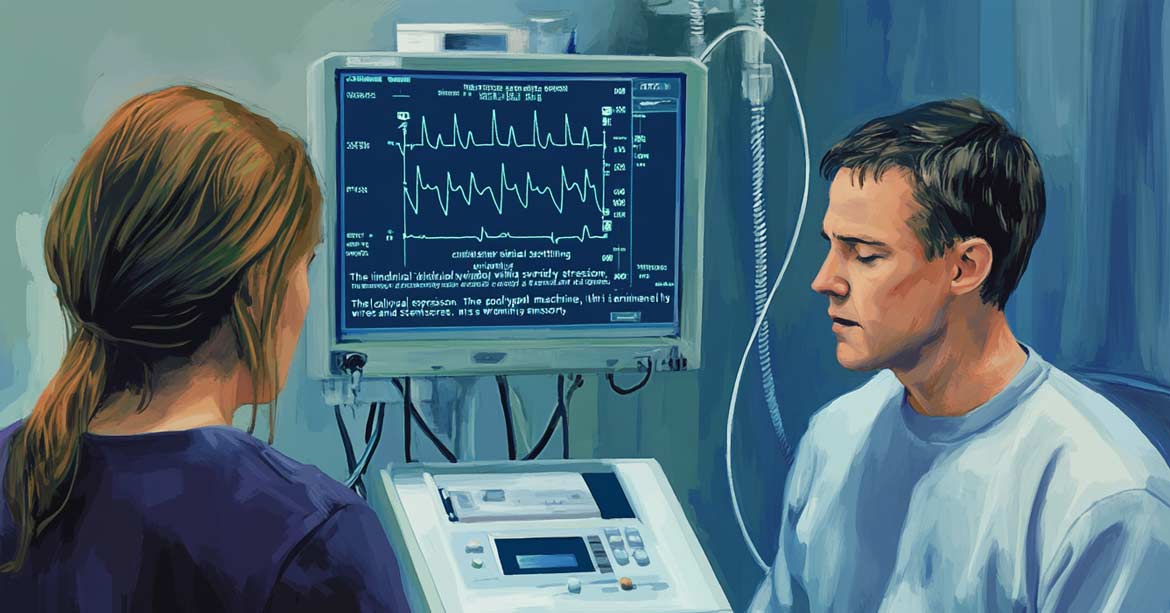
Yes: a properly administered polygraph is still reliable even when the examinee is nervous, because the technique does not measure fear but the difference between the reactions to the relevant questions and to the comparison questions. Almost everyone arrives at the test tense, so that baseline nervousness is cancelled out: what matters is the relative pattern of response, not how anxious the person is. Validated techniques reach an accuracy of around 85-90% according to the American Polygraph Association, and the National Academies review (2003) confirms they are right well above chance. That said, it is not infallible: an extreme emotional state, physical pain, certain medications or an anxiety disorder can raise the rate of false positives. That is why the pre-test interview, acclimatising the examinee and the skill of whoever interprets the charts weigh more than the machine itself.
Does nervousness make the polygraph fail?
Not on its own. The polygraph records three signals of the autonomic nervous system at once —breathing, cardiovascular activity and the galvanic skin response— but the decision is not based on the absolute level of arousal. Validated techniques compare how the person reacts to the relevant questions versus the comparison questions: if someone is nervous, they are nervous about all of them, so the general tension cancels out and only the differential reaction stands out. That is why a truthful, terrified examinee can pass, and a calm but deceptive one may not.
Which situations do affect reliability?
Some states do complicate the reading and raise the risk of false positives: an acute anxiety crisis, intense physical pain, taking certain drugs or substances, and some disorders that constantly alter the physiological response. Independent reviews, such as the National Academies report (2003), warn precisely that the test is not perfect and that certain conditions of the examinee can distort the records. That is why the result should be read as supporting evidence, never as the sole arbiter of the truth.
How does the examiner manage emotional stress?
Stress is handled before a single sensor is connected. In the pre-test interview the examiner explains each question —there are no surprise questions—, acclimatises the person to the equipment and establishes a baseline of their reactions. Then each series of questions is repeated at least three times: a consistent pattern across repetitions is far more informative than an isolated spike caused by nerves. If the examiner detects an emotional state that prevents a clean reading, a serious professional stops or reschedules the test instead of forcing a conclusion.
At El Polígrafo this test is carried out by Fernando, a polygraph examiner and forensic psychologist, with a Stoelting CPS Pro system and techniques recognised by the American Polygraph Association. His training in psychology is exactly what makes it possible to tell normal nervousness apart from an alteration that does compromise the result, and to act accordingly. You can clear up your doubts in our frequently asked questions before booking.