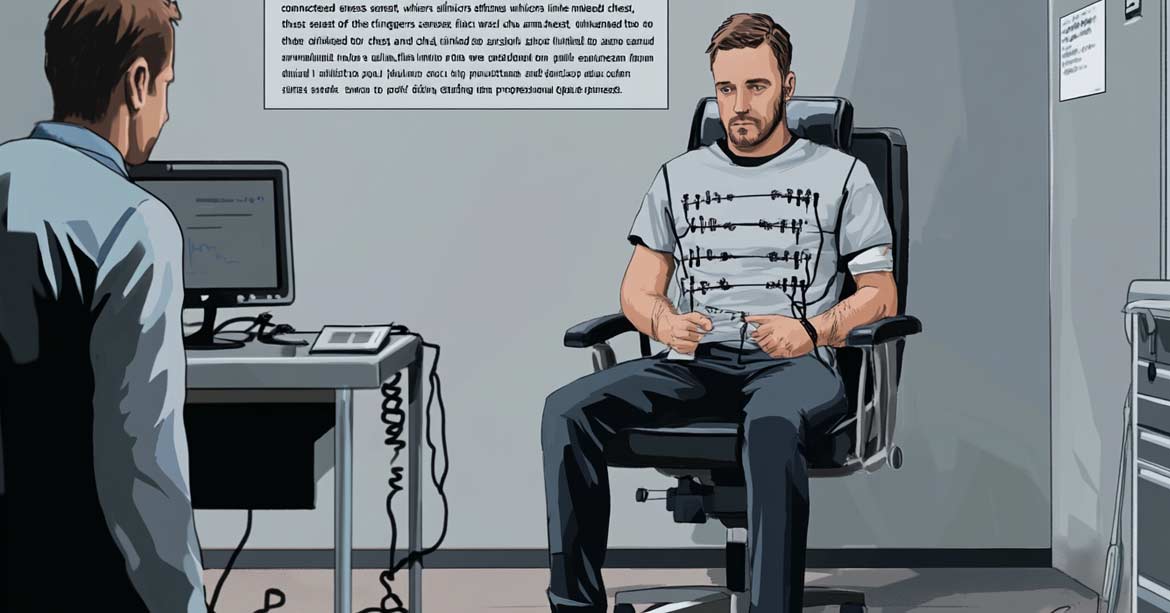
Yes, some companies use the polygraph within their personnel selection processes, but always as a voluntary and supporting test, never as a screen with legal weight. In Spain the result of a polygraph has no validity as evidence in a trial, and its use in the workplace is limited by the worker's fundamental rights and by data-protection law (GDPR and the Spanish LOPDGDD): no one can be forced to take the test, their express consent is required, and questions about religious beliefs, ideology, sexual orientation or health are not allowed. Well designed, it provides information about a candidate's honesty on strictly work-related matters —a history of theft, falsehoods on a CV— with an accuracy of 85-90% according to the American Polygraph Association. But a result on its own must never justify a dismissal or a hiring decision.
What do companies use the polygraph for?
In the corporate world the polygraph test is used above all in internal investigations —theft, information leaks or fraud— and, less often, as support in selection for sensitive roles (handling money, security, access to confidential data). The goal is not to "catch" the candidate, but to check their account of specific, verifiable facts. The test measures physiological reactions —breathing, cardiovascular activity and sweating— to a questionnaire agreed in advance, and an examiner interprets the charts to estimate the probability that the person is telling the truth.
Is it legal to use the polygraph in personnel selection?
It is not a "legal vacuum", as is sometimes claimed: it is a permitted but heavily conditioned use. For it to be lawful, the company must respect these safeguards:
- Consent and voluntariness: no one can be forced to take the test; refusing cannot have employment consequences.
- Data protection: the results are sensitive personal data; only the examiner, the person in charge of selection and the evaluated person should know them, and they must be handled in line with the GDPR and the LOPDGDD.
- No personal questions: religion, ideology, sexual orientation, union membership or health are off-limits. Only questions related to the job are allowed.
- It does not justify a dismissal: an unfavourable result has no legal validity and cannot, on its own, be grounds for dismissal.
Is it a good idea to use it for hiring?
As a complementary tool it can provide useful information, as long as it is used transparently and with respect for the candidate's rights. It does not replace an interview, reference checks or the judgement of the HR manager: it is one more data point, not the decision. At El Polígrafo workplace tests are carried out by Fernando, a polygraph examiner and forensic psychologist, with a Stoelting CPS Pro system; his training makes it possible to design a questionnaire focused solely on work matters and to interpret the records without overstepping legal limits. You can check the terms and the price of the test before hiring it.